

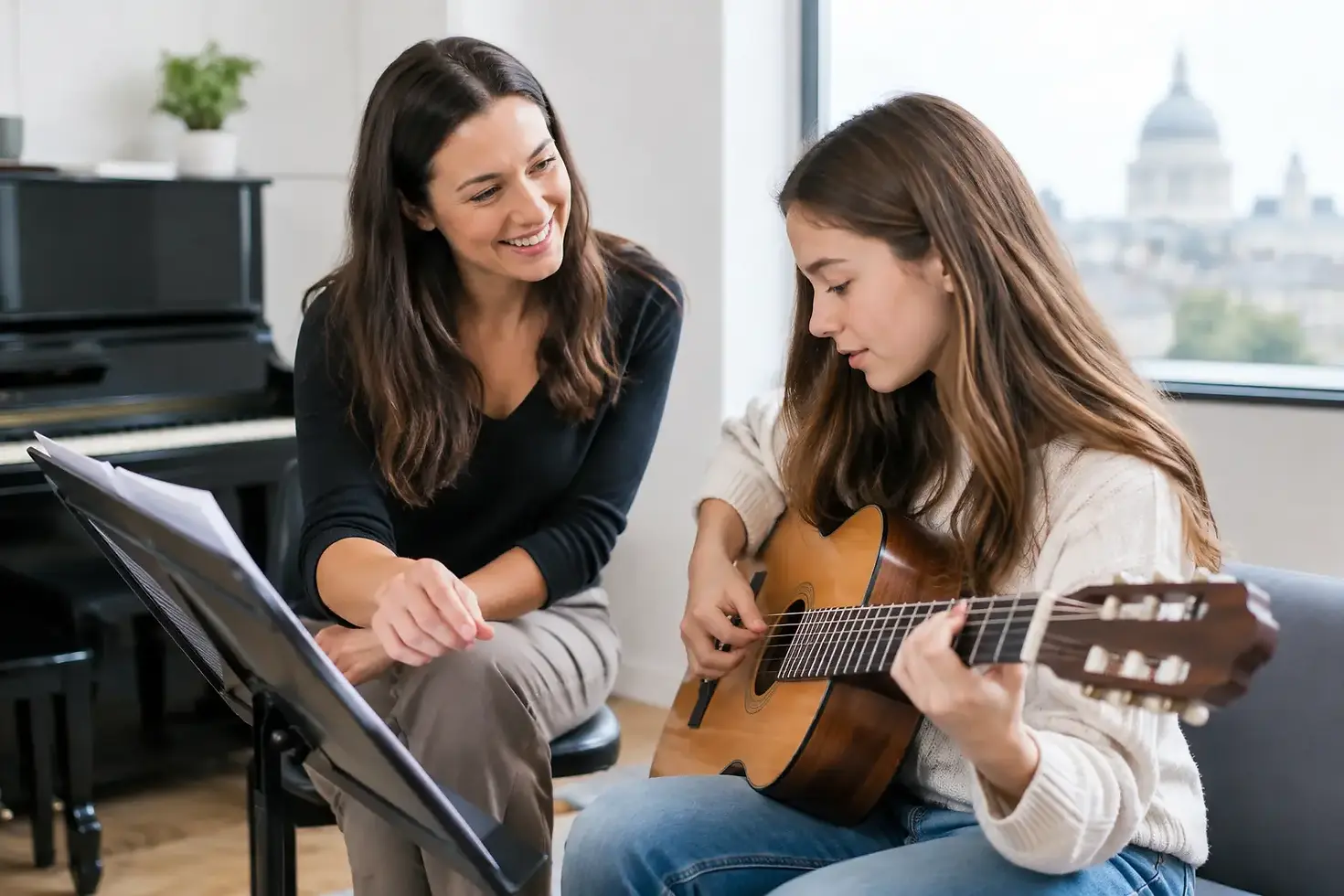
How to Choose the Best Music Teachers in London
A piano arriving in the living room, a child humming after school, or an adult finally picking up the guitar again can be the start of something brilliant. Finding the right music teachers London families can rely on is what helps that early excitement become a lasting skill. The best lessons feel encouraging and enjoyable, but they should also give students a clear sense of progress.
For parents, the decision is about more than choosing someone who can play well. You are inviting a teacher into your home and trusting them with your child’s confidence, time and development. For adult learners, the priorities may be flexibility, a teacher who listens, and lessons that fit around work and family life. Whatever the goal, a thoughtful match makes a real difference.
What makes a great music teacher?
A strong musician is not automatically the right teacher for every learner. Teaching requires patience, communication and the ability to explain the same idea in different ways. A beginner may need games, encouragement and simple routines, while an advanced student preparing for a graded examination may need detailed technical feedback, repertoire planning and performance coaching.
The right teacher will take time to understand what success looks like for the student. That might mean learning favourite songs, preparing for an audition, gaining confidence to sing in front of others, or working towards distinction-level exam results. There is no single route through music, and lessons should reflect the learner rather than follow a fixed script.
Look for a teacher who can balance structure with enjoyment. Regular practice matters, but children in particular respond far better when they feel proud of small achievements. A good teacher notices when a piece is becoming frustrating, adjusts the pace, and gives a student a realistic next step.
Choosing music teachers in London with confidence
London offers enormous musical choice, from specialist instrumental tutors to vocal coaches and experienced classroom teachers. That variety is valuable, but it can also make the search feel uncertain. Independent listings may tell you about qualifications and availability, yet they do not always show how carefully a tutor has been checked or how teaching quality is monitored over time.
For many households, using an established music education provider offers extra reassurance. It means the practical details are handled centrally: tutor matching, safeguarding checks, customer support and replacement options if the first match is not right. This can be especially helpful when choosing lessons for younger children.
When comparing options, ask clear questions about four areas:
Safety and credentials: Is the tutor certified and enhanced DBS-checked where appropriate for teaching children?
Teaching experience: Have they taught learners of the student’s age, instrument and current level?
Lesson planning: Will sessions be tailored to personal goals, whether those are enjoyment, exams or performance?
Support and flexibility: Is there a clear contact point if schedules change or you need help with the tutor match?
These questions are not about making the process complicated. They help you choose with the confidence that the teacher is both capable and suitable for your household.
Home lessons or online tuition?
For London families, in-home music lessons can remove one of the biggest barriers to regular learning: travelling across the city after school or work. A teacher who comes to you can make tuition easier to maintain, particularly for busy families juggling clubs, homework and different pick-up times. Children also tend to feel more relaxed when learning in familiar surroundings.
Home tuition is not the only good choice, however. Online lessons can work extremely well for motivated learners, adults with unpredictable schedules, and students who already have a suitable instrument and a quiet place to learn. They are also a practical option for learners outside London who want personalised tuition from home.
The best format depends on the student. Very young beginners often benefit from the focus and physical guidance of face-to-face teaching. An older student may thrive online if they are comfortable following demonstrations on screen and can practise independently between sessions. A trial lesson is often the simplest way to discover what feels right.
The right lesson length depends on the learner
Longer is not always better. A 30-minute session can be ideal for a young beginner who needs focused, positive instruction without becoming tired. Forty-five minutes often suits school-age learners who are ready to work on technique, reading and repertoire in more depth. A 60-minute lesson gives advanced students and adults more time for detailed work, performance preparation or several musical skills in one session.
Consistency matters more than choosing the longest slot available. A student who attends a manageable weekly lesson and practises little and often will generally progress more confidently than someone attempting to fit too much into an occasional session.
It is also worth choosing a provider with pay-as-you-go options rather than a lengthy contract, particularly at the beginning. Learning an instrument should feel like an opportunity, not a pressure. Flexible booking lets families find a rhythm that works around school terms, holidays and changing commitments.
Progress should be visible, not mysterious
Parents do not need to be musicians to recognise meaningful progress. You should be able to see growing confidence, hear songs becoming more secure, and understand what the student is working towards. Regular feedback from a tutor helps make this visible.
Progress is not always a straight line. A child may race through their first few pieces, then need more time when reading music becomes harder. An adult may make rapid gains in technique but need encouragement to perform in front of others. These are normal stages of learning, not signs that lessons are failing.
A thoughtful teacher will set attainable targets and review them regularly. For students taking graded examinations, that may involve choosing the right exam board and level, building a repertoire plan, and ensuring the learner is genuinely ready before booking. For those learning simply for pleasure, progress might mean playing a favourite song without stopping or joining in confidently with friends and family.
At Marie De Bry Arts Academy, progress analysis and ongoing tutor appraisal are designed to give families this added reassurance, alongside tuition tailored to each student’s goals.
Cost matters, but so does what is included
Music tuition is an investment, and clear pricing makes it easier to plan. When comparing lesson costs, consider the full experience rather than the headline figure alone. Does the price include a teacher travelling to your home? Is there support if you need to rearrange? Are there contracts, joining fees or unexpected charges?
A lower hourly rate may look appealing, but it can be less helpful if you are left to manage safeguarding checks, availability issues and tutor changes alone. Equally, premium pricing is only worthwhile if it brings a level of teaching, convenience and support that suits your needs.
Families with more than one child learning may also want to ask about sibling discounts. Lessons scheduled back-to-back can be a practical way to make music part of the household routine while keeping the afternoon manageable.
Help your child get the most from lessons
The most successful students do not need a perfect practice routine. They need a realistic one. Five focused minutes on a busy weekday can be more valuable than repeatedly postponing a longer session until the weekend.
Create a simple, accessible place for the instrument where possible. Celebrate effort as well as results, especially when a child is working through a difficult passage. Try not to turn practice into a battle: your role is to provide encouragement and routine, while the teacher guides the musical learning.
For adults, it helps to be equally kind to yourself. You do not need to reach a professional standard to benefit from music. A regular lesson can become a welcome part of the week: time to concentrate, create and make steady progress on something that is entirely your own.
The right teacher brings expertise, warmth and a plan that fits real life. Book a music lesson when you are ready to begin, then let the first small success be the reason to keep going.
Comments