

Online Music Lessons That Fit Family Life
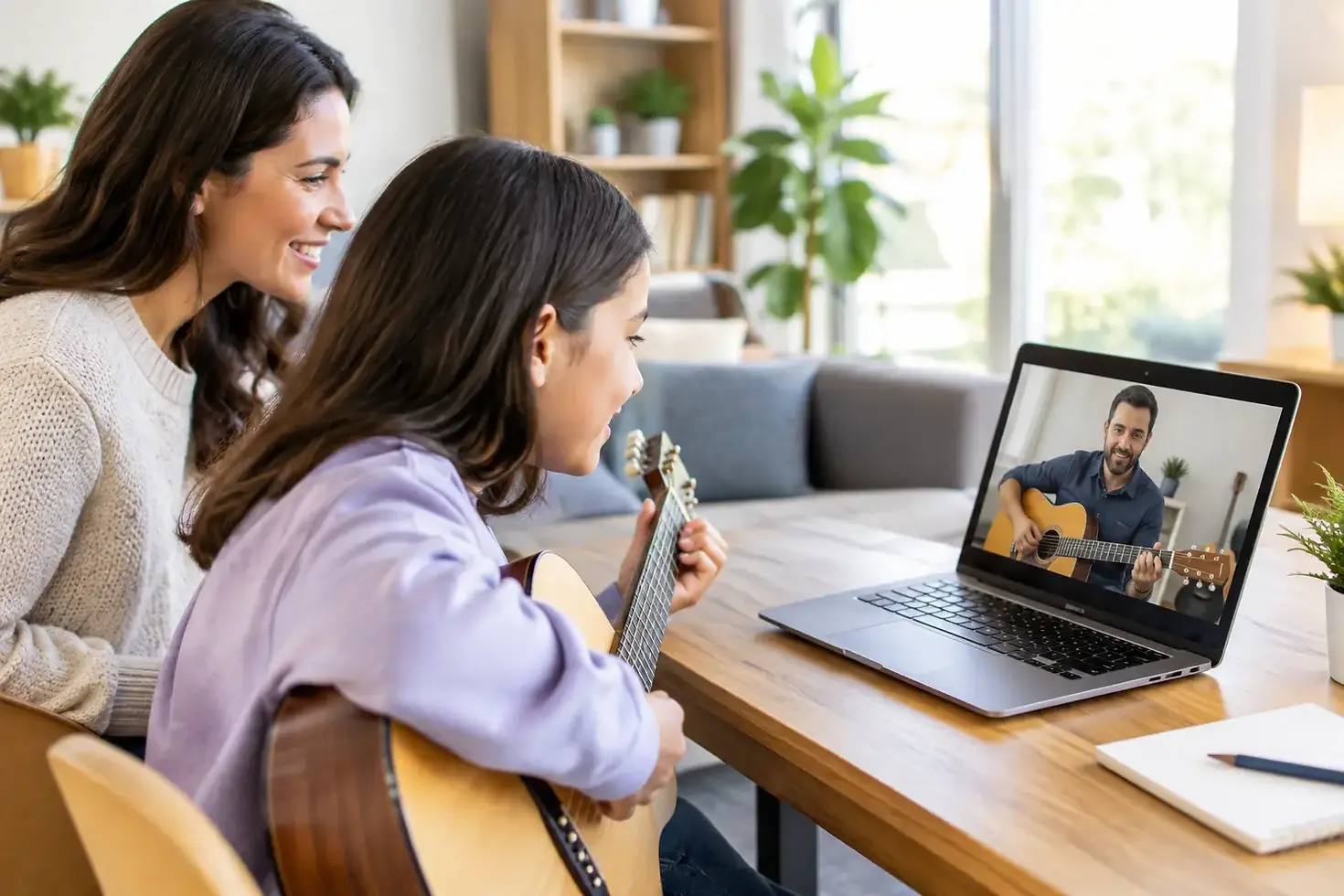
A child has finally chosen the guitar, piano or singing lessons they would like to try. Then comes the practical question: how will lessons fit around school, homework, clubs, work and family life? Online music lessons give families a straightforward answer, bringing one-to-one tuition into a familiar space without the weekly journey to a music school.
For adults, the appeal is just as clear. Learning an instrument should not mean rearranging an already busy week. With the right teacher, a focused session from home can become a welcome part of the routine - whether you are returning to music after years away, preparing for a grade, or simply learning a favourite song for pleasure.
Why online music lessons work for families
A good lesson is not defined by its location. It is defined by the relationship between teacher and student, clear goals and regular practice. Video tuition can offer all three, while making lessons easier to attend consistently.
Children are often more relaxed at home, where their instrument, music books and usual practice space are already to hand. Parents do not need to factor a rush-hour journey into every lesson, and siblings can continue with their own activities nearby. That extra breathing room matters. When music feels manageable, it is more likely to remain enjoyable.
Online lessons are also a valuable option for families outside London, including students across the UK. They make specialist tuition accessible where a suitable local teacher may be difficult to find. For learners in the United States and Canada, they can provide the same individual attention across distance and time zones, provided lessons are arranged at a suitable time.
This format is particularly effective for piano, keyboard, guitar, ukulele, violin, singing, music theory and many woodwind instruments. A teacher can demonstrate technique, listen closely, share written music on screen and give immediate feedback. For most learners, the essential ingredients of progress remain the same: a clear explanation, encouraging correction and small, achievable goals between sessions.
What a strong online lesson looks like
The best online teaching is not simply an in-person lesson placed in front of a webcam. It is planned for the screen. An experienced tutor will adjust camera angles, use demonstrations clearly and keep the student actively involved rather than talking for most of the session.
For a beginner, that may mean learning how to sit comfortably at the piano, finding a first set of notes and clapping a simple rhythm together. For a more established player, it could involve refining bow control, preparing scales for a graded examination or working through performance nerves before an audition.
A tailored approach is especially important for children. One learner may respond to a structured practice chart and clear weekly targets. Another may need to begin with songs they recognise, short musical games or a little more time to build confidence. Neither approach is less serious. Enjoyment and progress work best when teaching reflects the learner in front of the screen.
At Marie De Bry Arts Academy, students can be matched with a qualified, enhanced DBS-checked tutor for one-to-one tuition. Central matching and ongoing quality checks can offer reassurance to parents who want professional support without the uncertainty of finding an individual teacher alone.
The value of regular feedback
A child can practise for ten minutes every day and still feel unsure whether they are doing something correctly. Regular feedback prevents small issues from becoming habits. It also gives students recognition for what they have achieved, which is often the encouragement they need to keep going.
Progress reporting helps parents see more than a collection of lesson notes. It can show developing musical skills, growing confidence and the next practical goal, whether that is learning a new piece, improving rhythm or working towards a music grade. Not every student needs to take examinations, but having a clear sense of direction benefits learners at every level.
Setting up online music lessons at home
You do not need a studio full of equipment. A reliable internet connection, a laptop or tablet, and a quiet corner are usually enough to start. The student should be visible from a useful angle, and the teacher needs to be able to see hands, posture or the instrument where possible.
For piano lessons, position the device so the keyboard and the student’s upper body can be seen. Guitar and violin students benefit from a view of both hands. Singers should stand or sit where they can breathe freely, with enough room to practise confidently without worrying about knocking into furniture.
Good sound makes a difference, but perfection is not required. Turn off notifications, close unnecessary applications and use headphones only if they help the student hear more clearly. A parent can test the set-up before the first lesson, then allow the session to become the student’s own time with their tutor.
It is helpful to keep music books, a pencil, water and the instrument ready a few minutes beforehand. This small routine creates a calm start and ensures that lesson time is spent making music rather than searching for sheet music.
Choosing the right lesson length
The ideal session length depends on age, concentration and goals. A 30-minute lesson can be an excellent starting point for younger beginners, especially when practice is short and regular during the week. It gives enough time for a warm-up, a new skill and a clear task to take away.
A 45-minute session often suits school-age students who are ready for more detailed work. There is room to revisit technique, learn repertoire and develop theory or sight-reading without making the lesson feel rushed. A 60-minute lesson can be particularly useful for advanced students, examination preparation, adult learners and those studying more than one area in depth.
Longer is not automatically better. A focused half-hour with a teacher who understands the student may be more productive than an hour when concentration has already disappeared. The right choice can also change over time. A beginner may begin with shorter sessions and move up as confidence and stamina grow.
How parents can support progress without taking over
Parents do not need musical training to be helpful. The most valuable support is usually practical: protecting a regular practice time, showing interest and celebrating effort as well as results. Asking, “What did you enjoy learning today?” can open a much better conversation than asking for an immediate performance.
Young children may need help remembering their practice task. Older students usually benefit from more independence, while still knowing that somebody notices their commitment. If motivation dips, speak to the tutor early. A change of repertoire, a smaller weekly target or a fresh challenge may be all that is needed.
Avoid comparing siblings or expecting every week to sound polished. Music develops in stages. There are moments when a new technique feels awkward before it begins to feel natural, and that is a normal part of learning.
When online tuition may not be the best fit
Online learning is highly effective for many students, but it is not identical to having a teacher in the room. Some very young children may initially need more hands-on guidance with posture, instrument position or attention. Certain advanced technical issues can also be easier to address in person.
For London families, in-home tuition can be a better choice when a teacher travelling to the student would offer the most support. A blended approach may work well too: regular online sessions for convenience, with occasional in-person lessons where appropriate. The right decision depends on the learner, the instrument and what helps the household maintain a positive routine.
A trusted provider should make this decision feel low risk. Flexible session options, pay-as-you-go booking and no long-term contract allow families to find the arrangement that genuinely works for them, rather than forcing music around a rigid package.
Music has a remarkable way of creating small moments of pride: the first tune played without stopping, a brave attempt at singing aloud, a difficult rhythm finally falling into place. Give those moments a regular place in the week, and a lesson from home can become far more than another item on the calendar.

Comments